Choosing the right CRM platform is one of the most critical decisions for growing businesses. A CRM affects sales processes, marketing automation, customer support, reporting, team collaboration, and long-term scalability.
In this comparison, we break down HubSpot vs Salesforce vs Zoho CRM across ease of use, pricing, enterprise readiness, automation, integrations, and scalability so you can decide which CRM fits your business goals.
Quick Comparison Table
| Feature | HubSpot CRM | Salesforce | Zoho CRM |
|---|---|---|---|
| Website | https://www.hubspot.com | https://www.salesforce.com | https://www.zoho.com/crm/ |
| Ease of Use | Easy | Moderate | Moderate |
| Best For | Small to mid-size teams | Enterprise & complex sales | SMBs on budget |
| Automation | Strong | Very Strong | Good |
| Reporting & Analytics | Robust | Enterprise-grade | Strong |
| Integrations | Excellent | Excellent | Good |
| Customization | Moderate | Very High | High |
| Pricing | Free tier + paid | Paid only | Affordable tiers |
| Ideal For | Startups & growth teams | Large enterprises | Budget-conscious businesses |
HubSpot CRM Review
Website: https://www.hubspot.com
Pricing: Free plan available; paid Growth Suite plans start around $50+/month
Overview
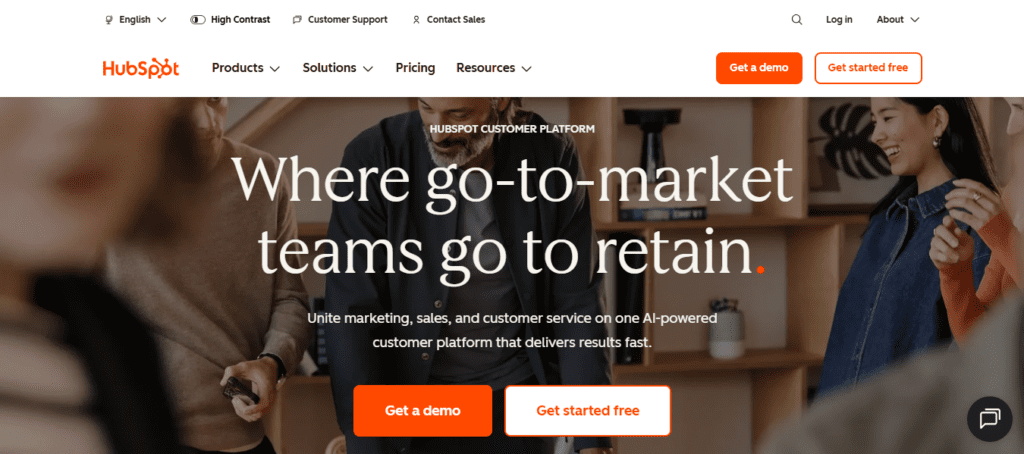
HubSpot CRM is known for its ease of use, clean UI, and fast onboarding. It includes built-in tools for sales pipelines, marketing automation, customer service tickets, email sequencing, and reporting. The free tier is one of the most generous in the CRM space, making it ideal for small businesses just starting out.
Key Strengths
- Intuitive user interface
- Free CRM for unlimited users
- Built-in sales, marketing, and service stack
- Great onboarding and educational resources
- Strong reporting and dashboards
Limitations
- Advanced automation features require paid plans
- Customization is more limited than enterprise platforms
- Complex workflows can require higher tiers
Best For
Small to mid-size teams, startups, companies adopting inbound marketing.
Salesforce Review
Website: https://www.salesforce.com
Pricing: Paid plans only, starting around $25-$75+ per user/month
Overview
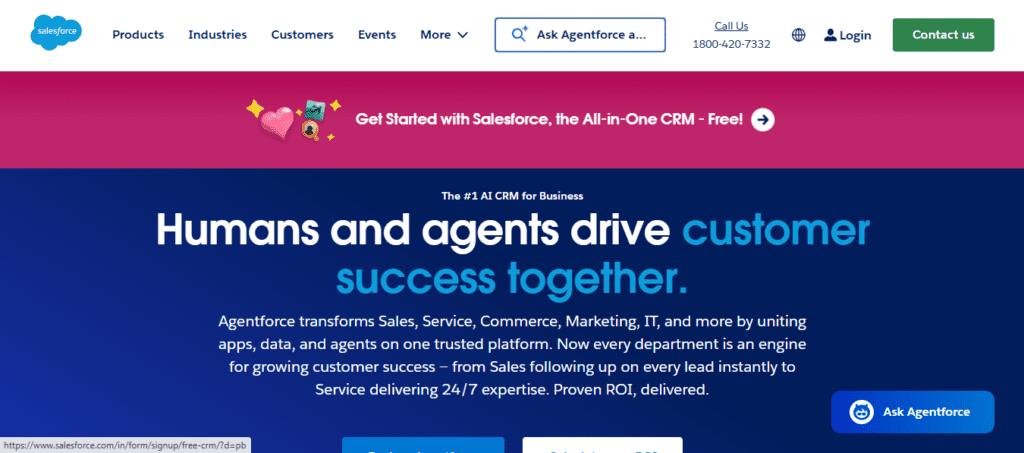
Salesforce has long been the enterprise CRM standard. It offers unmatched customization, deep automation, AI-powered insights (Einstein AI), and an enormous ecosystem of integrations and third-party extensions. Salesforce scales from mid-market to large global enterprises.
Key Strengths
- Highly customizable objects, workflows, and data model
- Enterprise-grade automation and analytics
- AI-assisted insights (Einstein)
- Massive ecosystem of apps and partners
- Suitable for global teams and complex sales
Limitations
- Steep learning curve
- Higher cost than most CRMs
- Implementation often requires training or consulting
Best For
Large enterprises, complex sales organizations, and teams needing deep customization and analytics.
Zoho CRM Review
Website: https://www.zoho.com/crm/
Pricing: Affordable plans starting around $14/user/month
Overview
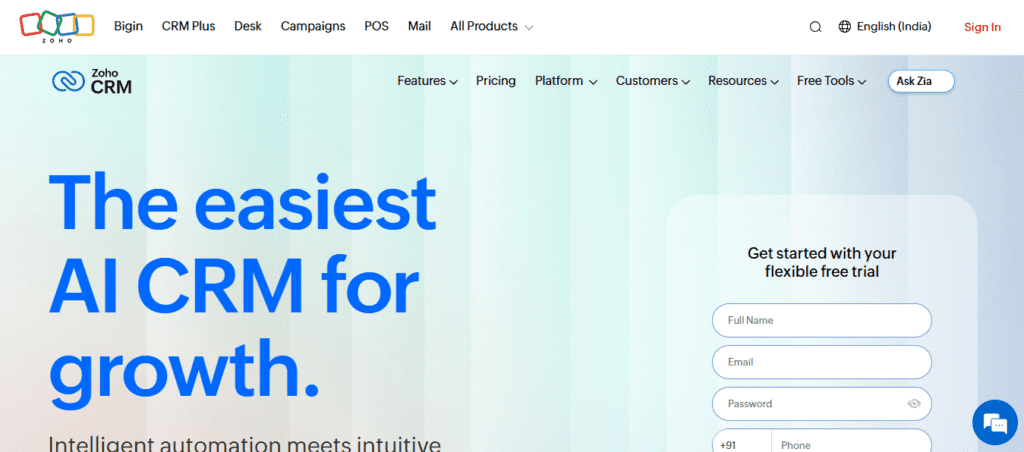
Zoho CRM offers a full-featured CRM solution at a lower price point. It includes sales automation, deal pipelines, AI suggestions (Zia), custom modules, workflows, and multi-channel communication. Zoho is part of a broader suite of business tools from Zoho, making it a viable all-in-one business platform.
Key Strengths
- Affordable pricing
- Strong automation for SMBs
- Integrated ecosystem (Zoho One)
- Customization and workflow rules
- Good reporting and dashboards
Limitations
- Interface can feel dated
- Advanced enterprise features less refined than Salesforce
- Support and onboarding vary by plan
Best For
Small and mid-size businesses on a budget that still need customization and automation.
Feature Comparison
Ease of Use
- HubSpot: Easiest to adopt; best for teams onboarding quickly.
- Zoho CRM: Moderate; familiar interface but slightly less polished.
- Salesforce: Most complex; requires training for advanced use.
Winner (Ease of Use): HubSpot
Customization and Scalability
- Salesforce: Highest customization.
- Zoho CRM: High, especially at affordable price.
- HubSpot: Moderate; designed for simplicity.
Winner (Customization/Scalability): Salesforce
Automation and Analytics
- Salesforce: Deep automation and enterprise analytics.
- HubSpot: Strong automation with Growth Suite.
- Zoho CRM: Good automation rules and AI suggestions.
Winner (Automation): Salesforce
Pricing Value
- HubSpot: Great free tier + strong value for mid-size teams.
- Zoho CRM: Best price for core CRM features.
- Salesforce: Premium pricing, enterprise focus.
Winner (Value): Zoho CRM
Use-Case Recommendation
| Need | Best CRM |
|---|---|
| Beginner or startup | HubSpot CRM |
| Enterprise & complex workflows | Salesforce |
| Affordable all-around CRM | Zoho CRM |
| Full marketing + sales stack | HubSpot |
| Deep customization & integrations | Salesforce |
| Budget automation | Zoho CRM |
SaaSTour Verdict
Each CRM serves a distinct audience:
- HubSpot CRM is ideal for teams that want ease of use, a generous free tier, and fast onboarding.
- Salesforce is the best choice for large enterprises or teams needing deep customization and automation at scale.
- Zoho CRM delivers strong features at a very accessible price, perfect for SMBs and budget-focused businesses.
Your choice should be based on business size, automation needs, and growth plans — not just feature lists.
Frequently Asked Questions
Is HubSpot truly free?
Yes. HubSpot CRM’s free tier includes unlimited users and core sales tools.
Which CRM has the best automation?
Salesforce leads with enterprise automation capabilities.
Is Zoho CRM customizable?
Yes. Zoho offers custom modules, workflows, and AI insights at an affordable price.
Which CRM is best for startups?
HubSpot CRM is typically the most accessible starting point.